
Say you asked two suppliers for a quote and got a pad-mounted transformer from one and a box-type substation from the other. It happens all the time, and it can feel confusing because both units step voltage down for distribution. But they are not the same machine, and they are not solving the same problem. A pad-mounted transformer is a single oil-filled tank that changes voltage. A box-type substation is a prefabricated enclosure holding switchgear, a transformer and a low-voltage board as one complete distribution point. Which one you actually need comes down to your grid code, what your low-voltage side has to do, and how much space and maintenance budget you have. This page walks you through the difference and gives you a practical way to choose.
Pad-Mounted Transformer vs Box-Type Substation: What's the Real Difference?
A transformer only changes voltage
A pad-mounted transformer is an oil-immersed distribution transformer sitting at ground level inside a lockable, tamper-resistant steel cabinet on a concrete pad. It takes medium voltage from an underground cable and steps it down, say from 34.5 kV or 11 kV to 480 V or 400 V. On the three-phase side, North American units follow IEEE C57.12.34 and are rated for 60 Hz networks, typically up to 10 MVA and 34.5 kV. The cable compartment is usually dead-front, meaning separable insulated connectors leave no live metal exposed when the door opens.
What it does not include is separate, standalone switchgear and protection. Most of the switching happens inside the oil, through a loadbreak switch plus bayonet and current-limiting fuses. The low-voltage side is simple, usually just cable terminals feeding a single service.
A box-type substation is a complete distribution point
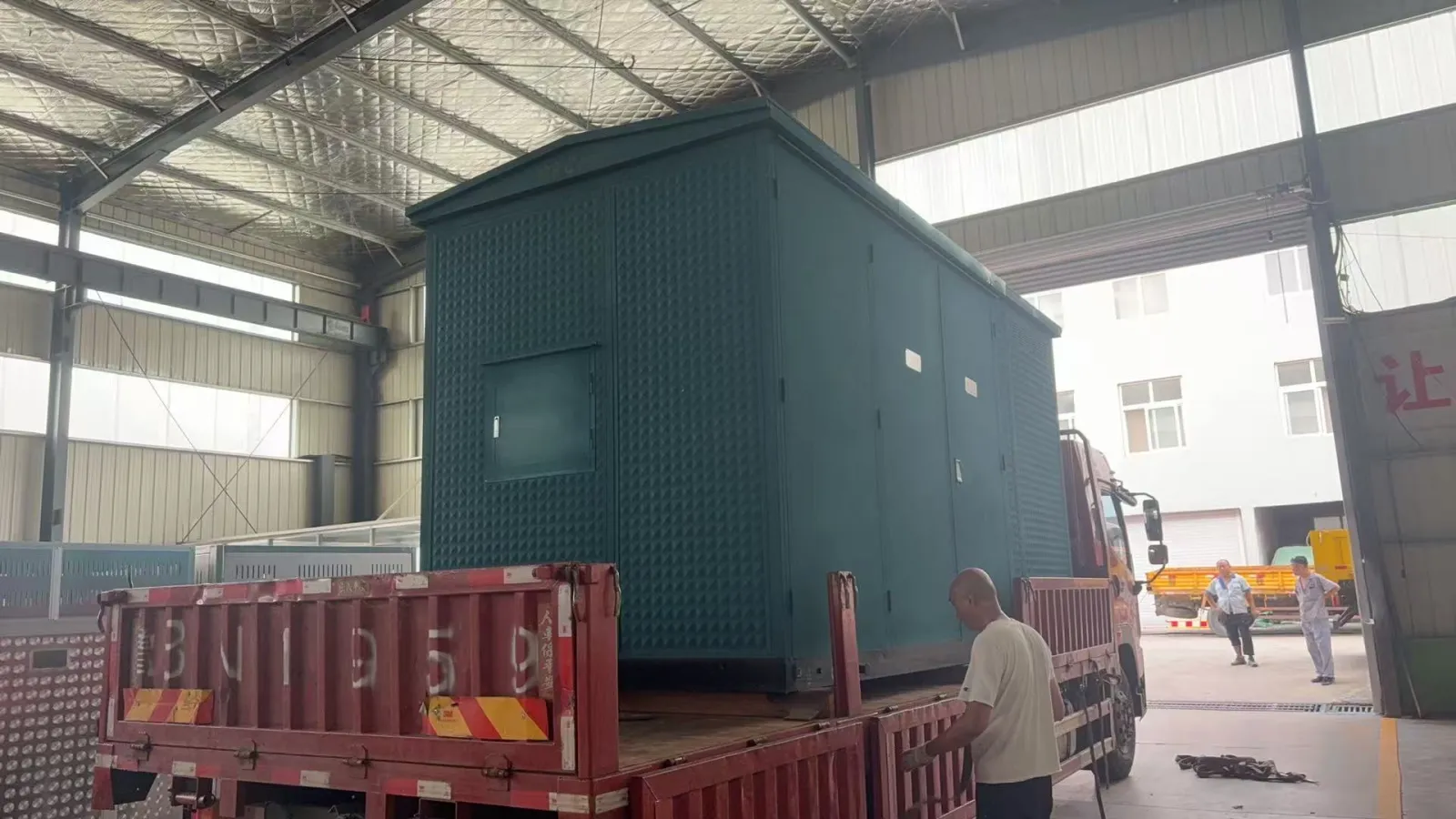
A box-type (or compact, or prefabricated) substation to IEC 62271-202 is a type-tested enclosure with three functional compartments:
1. A medium-voltage compartment with switchgear to IEC 62271-200 — typically a ring main unit (RMU) with two cable switches and a transformer feeder, protected by fuses or a breaker with relay.
2. A transformer compartment — an oil-immersed or cast-resin transformer to IEC 60076, commonly 100 kVA to 2500 kVA.
3. A low-voltage compartment — a switchboard to IEC 61439 with an incomer, outgoing feeders, metering and sometimes capacitor banks.
Because everything sits in one tested unit, you get a complete, ready-to-energize distribution point instead of just a voltage changer.
The "American-type" box is the hybrid in between
In China and a lot of Asian, Middle Eastern and African markets you will also meet the "American-type" box substation, often catalogued as the ZGS series. It works on the pad-mount principle, with the transformer core, windings, loadbreak switch and fuses all in one oil tank, but it adds a front cabinet for the MV cable terminations and an LV compartment that usually carries a moulded-case breaker, metering and a few feeders. It is rated to IEC or GB standards, typically 10–35 kV primary and 400–800 V secondary, in 50 Hz or 60 Hz. It is lighter and cheaper than a full European-style box, but the MV protection is limited to fuses and the transformer is not a separate, replaceable item.
|
Criterion |
Pad-Mounted Transformer |
American-Type Box Substation |
European-Type Box Substation |
|
What it is |
Transformer with integrated cable compartment |
Pad-mount principle + LV compartment |
Switchgear + transformer + LV board in one enclosure |
|
Governing standards |
IEEE C57.12.34 / C57.12.28 |
IEC 60076 / GB, in-tank switch + fuses |
IEC 62271-202 / 62271-200 / 60076 / 61439 |
|
Typical markets |
US, Canada, Mexico (ANSI, 60 Hz) |
China, Asia, Middle East, Africa, solar & wind collection |
IEC markets, RMU-based utilities |
|
Typical capacity |
Up to ~10 MVA |
Small to medium |
100 kVA – 2500 kVA |
|
Primary voltage |
Up to 34.5 kV |
10–35 kV |
Up to 52 kV |
|
MV switching |
Oil-immersed loadbreak switch (radial/loop) |
Oil-immersed loadbreak switch |
RMU or switchgear panel (SF6 or solid-insulated) |
|
MV protection |
Bayonet fuse + current-limiting fuse |
Bayonet fuse + current-limiting fuse |
HRC fuse-switch or breaker + relay |
|
LV side |
Cable terminals only |
Breaker, metering, a few feeders |
Full LV switchboard, multiple feeders |
|
Footprint |
Smallest |
Small to medium |
Largest |
|
Safety in public areas |
Tamper-resistant, dead-front |
Depends on LV compartment design |
Compartment segregation + IAC rating |
|
Transformer replacement |
Whole unit |
Whole unit |
Transformer removable separately |
|
Typical capital cost |
Lowest |
Low to medium |
Highest |
Which Is Better for Your Application?
Residential & commercial underground distribution
For underground distribution in residential and commercial areas, a pad-mounted transformer is the natural pick. It is compact, safe in public spaces, and standard on North American-style loop or radial networks. One service, one cable, and a pad-mount is usually all you need.
Industrial & multi-feeder sites
Go with a European-type box substation here. If you need several outgoing feeders, metering, capacitor banks or a breaker with relay protection, the integrated LV board and switchgear quickly earn their keep.
Solar / PV & BESS step-up stations
This is where the three designs compete hardest. On ANSI networks, loop-feed pad-mounted step-up transformers are the norm, daisy-chained along collection circuits. On IEC/GB networks, American-type boxes are common at 10–35 kV because they are compact and cheap per MVA. European-type units come in when the grid code calls for a breaker with relay, metering or an RMU on the incoming cable.
Utility / grid-code-driven projects
Start with the utility's requirement before anything else. On an ANSI-based network with underground loop distribution, a pad-mount is usually the expected answer. If the code demands switchgear with relay protection, you need a box-type substation, and price rarely wins that argument.
Standards That Decide Your Choice
IEEE/ANSI vs IEC
North America and parts of Latin America run ANSI-based 60 Hz networks. Most of Europe, Asia, the Middle East and Africa run IEC-based networks, mostly at 50 Hz. The pad-mounted transformer is defined by IEEE C57.12.34 for three-phase and C57.12.38 for single-phase, with security requirements in C57.12.28. The box-type substation is defined by IEC 62271-202, with the transformer per IEC 60076 and the LV board per IEC 61439.
Why grid code usually decides before price does
Your protection philosophy, fuses versus a breaker with relays, is often fixed by the utility or the grid code rather than by your budget. Above a certain rating, or for certain feeder configurations, a breaker may be mandatory. Check this first, because it settles a lot of decisions before cost even comes into it.
Import-market quick reference
In North America, Canada and Mexico, ANSI 60 Hz, so a pad-mounted transformer is the expected choice. Across the Middle East, Africa and Southeast Asia, IEC/GB 50 Hz (some 60 Hz), where American-type or European-type box substations are common. In Europe, IEC 50 Hz, where the European-type compact substation with an RMU is standard. Confirm your target market's frequency and primary voltage before you compare prices.
Safety & Maintenance in Public Areas
Dead-front vs live-front
Pad-mounted units keep things safe with a tamper-resistant enclosure and a dead front, so no live metal is exposed when the door opens. Most switching happens under oil using hot-stick tools. Operators should still follow the utility's switching procedures and wear arc-rated PPE.
IAC rating and compartment segregation
Box-type substations rely on compartment segregation, RMU interlocks and an internal arc classification (IAC) tested on the whole enclosure. If the unit sits somewhere the public can reach, ask for an IAC-rated enclosure and confirm which sides were tested, accessibility A, B or both. For American-type units, ask how the LV compartment is separated from the MV terminations and what pressure relief the tank has.
Maintenance model: replace the unit vs replace components
Pad-mounted and American-type units have few maintenance points: oil level and temperature gauges, a pressure-relief device, fuses and the loadbreak switch. But an internal fault usually means replacing or rewinding the whole unit. Box-type substations have more to look after, RMU gas pressure or mechanism checks, relay testing, LV breakers, ventilation filters and fans, yet every component is standard and replaceable. A failed transformer can be swapped without touching the switchgear.
Cost & Project Timeline
First cost vs installed cost
A pad-mounted transformer is usually the cheapest per unit. But you should compare total installed cost, meaning foundation, cable runs, external protection and commissioning. When you need several LV feeders or full relay protection, a box-type substation can actually be cheaper to install, because it arrives as one tested, factory-integrated unit.
Delivery / energize time
A box-type substation is factory-built and type-tested, and after foundation work it is typically ready to energize within days of arrival. A conventional field-built substation can take months. Pad-mounted transformers ship quickly and are simple to sit on a pad.
When a pad-mount is cheaper per MVA — and when it isn't
Pad-mounted and American-type units usually cost less per MVA than a full European-type box because they leave out the separate switchgear and LV boards. Below roughly 2–3 MVA with a single load, a pad-mount is often the cost-effective answer. Above that, or where you have multi-feeder and protection needs, the box-type substation wins on lifecycle value.
How to Choose — Step-by-Step
Identify your utility, grid code and frequency. ANSI 60 Hz with underground loop distribution points to a pad-mount. IEC 50 Hz points to a box-type substation.
Define what the LV side has to do. One service or one inverter, a pad-mount or American-type unit is enough. Several outgoing feeders, metering or capacitor banks, go with a compact substation.
Check the MV protection requirement. Fuses cover most distribution and inverter duties, but a breaker with relays may be required above a certain rating or by the grid code.
Compare footprint, foundation and transport limits on site.
Decide on the maintenance model: replace the unit, or replace components.
Send us a single-line diagram and our engineers will recommend the right configuration in a technical proposal.
FAQ
Is a box-type substation the same as a pad-mounted transformer?
Not exactly. A pad-mounted transformer is a transformer with an integrated cable compartment and switching inside the tank. A box-type substation is an enclosure that houses separate MV switchgear, a transformer and an LV switchboard. The American-type box borrows the pad-mount principle but adds an LV compartment.
What is the difference between a pad-mounted transformer and a compact substation?
A pad-mounted transformer only changes voltage. A compact (box-type) substation delivers a complete, tested distribution point with switching, protection and low-voltage output.
Can a pad-mounted transformer be built to IEC / 50 Hz?
Yes. The construction can be adapted to IEC ratings, 50 Hz operation and IEC test levels, though the IEEE compartment dimensions and accessories would then be agreed separately.
Are box-type substations safe for public areas?
Yes, when built and installed to standard. For public access, choose IAC-rated enclosures and dead-front or segregated compartments.
Which is cheaper for a solar inverter station?
Per MVA, pad-mounted and American-type units usually cost less than a full European-type box because they leave out separate switchgear and LV boards. Your grid code's protection requirement often settles the matter before cost does.
What size do I need for a commercial building or residential development?
Size from your connected load and add at least 20% headroom for growth, then confirm the secondary voltage your site needs. Send us your load data and we will give you a precise recommendation.
Get a Configuration Proposal
Send us your single-line diagram, network voltage and frequency, LV loads or inverter data, and site conditions. Our engineers will recommend a pad-mounted or box-type configuration in a technical proposal, free and tailored to your project.
About the author: Application and sales engineers at Qingdao Junling Transformer Co., Ltd., a manufacturer of pad-mounted transformers, box-type substations and distribution equipment for export.
Copyright © 2026 by Qingdao Junling Transformer Co., Ltd. All Rights Reserved
Privacy Policy

