
Short version: a small 50 kVA distribution transformer leaves the factory for under $1,500. A 1,000 kVA unit runs about $9,000–$15,000. A big power transformer in the 5–20 MVA range is $50,000–$200,000 and up.
If those ranges look wide, that’s because they are. Two suppliers can quote “the same 1000 kVA transformer” at $9,000 and $16,000 and both be telling the truth — one is quoting copper windings to IEC 60076, the other aluminum to a basic efficiency class, and neither number yet includes shipping or installation. This page breaks down where the money actually goes.
What a distribution transformer costs, by rating
The table below is factory price, FOB a Chinese port, for oil-immersed three-phase distribution transformers with copper windings. No freight, duty, tax, or installation.
|
Rating (kVA) |
FOB price (USD) |
|
50 kVA |
$800 – $1,500 |
|
100 kVA |
$1,500 – $3,000 |
|
250 kVA |
$2,500 – $5,000 |
|
500 kVA |
$5,000 – $8,000 |
|
1,000 kVA |
$9,000 – $15,000 |
|
1,500 kVA |
$13,000 – $22,000 |
|
2,000 kVA |
$18,000 – $30,000 |
|
2,500 kVA |
$22,000 – $38,000 |
|
3,150–5,000 kVA |
$35,000 – $70,000 |
Two knobs move these numbers before anything else. Windings: aluminum is 15–25% cheaper but the unit ends up bigger and runs warmer; copper costs more and you’ll be happy you paid for it in year eight. Voltage: a 33 kV or 34.5 kV primary needs more insulation and bushings than 11 kV, and once you step up to 110 kV you’re in a different budget.
Oil vs dry: how much more does dry-type cost?
Oil-immersed is the default outdoors. It’s cheaper, handles short overloads, and has a 25–30 year life. Dry-type (cast resin) has no oil in it, so it can live inside a mall, a hospital, a tunnel, or a basement without a bund wall.
That fire safety costs you. A dry-type unit typically runs 10–30% above an equivalent oil unit — a 1000 kVA cast resin transformer lands around $11,000–$19,000 against $9,000–$15,000 oil. But the indoor installation you save on (no oil pit, no fire barrier, less ventilation) often eats that difference back.
Other transformer types, other budgets
Pad-mounted. A locked cabinet on a concrete pad, common on retail parks and solar farms. Factory price is roughly $6,000–$12,000 at 300–750 kVA, and $25,000–$45,000 at 1,500–2,500 kVA. In North America the installed number — pad, trenching, cabling, contractor — is more like $38,000–$155,000.
Pole-mounted. The small three-phase units on utility poles, 50–200 kVA, are $1,500–$6,000 ex-works.
Packaged substation. Transformer plus MV and LV switchgear in one kiosk is a different product. 1000–2500 kVA compact substations run $30,000–$80,000, climbing as protection and automation get added.
Power transformers (5 MVA+). These are built to order, type-tested, and shipped on heavy-lift vessels. 5–20 MVA at 33–110 kV is $50,000–$200,000+, and lead time is months.
The price you pay is not the price on the quote
This is where budgets die. The FOB number is only half the story:
|
Cost layer |
What it looks like |
|
Unit |
the line item on the proforma invoice |
|
Sea freight + insurance |
a container share, China to your port — Southeast Asia is cheap, West Africa or South America isn’t |
|
Duty and VAT |
your local HS code; often 10–25% of declared value |
|
Local delivery, crane, concrete pad, oil containment |
$3,000–$15,000 depending on site |
|
Electricians, testing, commissioning |
$75–$125/hour per tradesman; 24–72 hours on a 1500 kVA job |
|
Permits and commissioning |
$0–$3,000 |
A worked example: a 1000 kVA copper-wound oil transformer at $12,000 FOB, with freight, duty, pad, crane and electricians, turns into a $25,000–$35,000 energized project. Rule of thumb: on a mature-market installation, plan on 1.5–3× the ex-works price to switch it on. Get the supplier to quote CIF or DDP and most of the surprise disappears.
Why two “same” quotes differ
When a $9,000 and a $16,000 quote both say “1000 kVA”, one of these is different between them:
Rating and voltage. Price scales with kVA, but price per kVA falls as the rating climbs — bigger units are cheaper per kW.
Windings. Copper vs aluminum is the most common hidden difference. Ask.
Efficiency class. Low-loss cores to GB 20052-2024 or IEC 60076 use more steel. They cost more now and save you on no-load losses for 25 years.
Tap changer and protection. Off-circuit tap changer is standard; on-load tap changer (OLTC), protection relays, Buchholz, conservator, smart monitoring each add money.
Certification. IEC type tests, CE, ANSI, SIRIM in Malaysia, KEMA witness tests — they cost and they’re not optional in your market. Budget for them before comparing prices, otherwise you’re comparing apples to not-quite-apples.
Lead time. Rush orders cost real money; multi-unit orders earn real discounts.
How to get a quote that isn’t a “from price”
“How much is a transformer?” gets you a vague number. Send these and you get a firm one: kVA rating, single- or three-phase, primary voltage, secondary voltage, 50 or 60 Hz, vector group (usually Dyn11), impedance %, oil or dry, copper or aluminum, efficiency standard and certifications required, your destination port, quantity, and when you need it.
Quick answers
How much is a 1000 kVA transformer? About $9,000–$15,000 FOB with copper windings; more landed and installed.
Copper or aluminum — which is cheaper? Aluminum, by 15–25%. Copper is smaller, cooler and more efficient.
How long does a transformer last? 25–30+ years with decent maintenance.
Can I buy directly from a China factory? Yes, and it’s usually the cheapest route — just lock down the certification, the Incoterm, and the lead time before you place the order.
Send us your specs
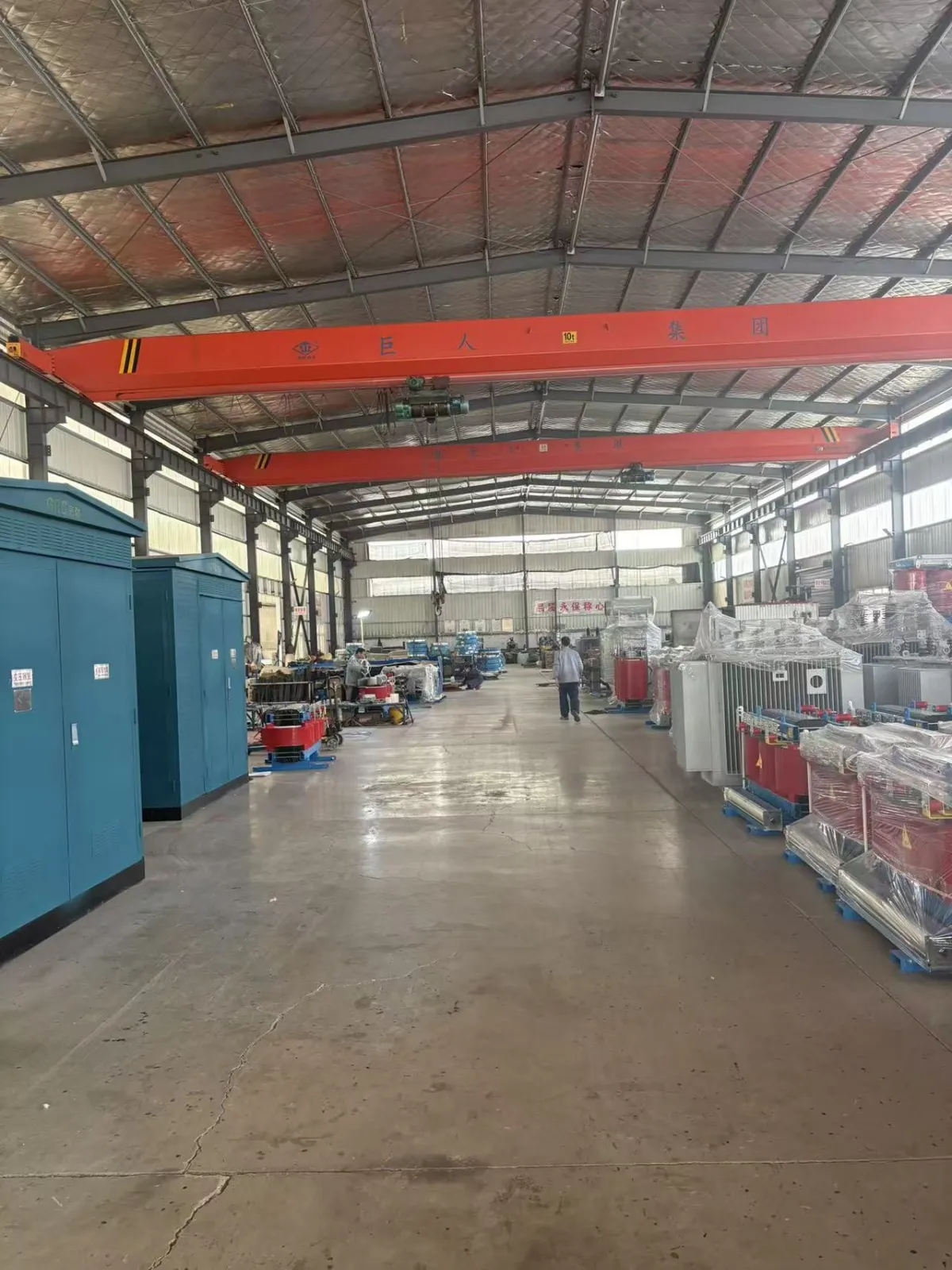
Ranges above are planning numbers, not a quote — copper and steel prices and exchange rates move them. Send kVA, primary/secondary voltage, frequency, winding material, and your destination, and we’ll come back with a firm FOB or CIF number within 24 hours. We build oil-immersed, dry-type and pad-mounted units at our Qingdao works, certified to IEC 60076 and CE, shipping to Southeast Asia, Central Asia, the Middle East and Africa.
Copyright © 2026 by Qingdao Junling Transformer Co., Ltd. All Rights Reserved
Privacy Policy

