As the global energy structure accelerates its transition toward low-carbon solutions, the large-scale development of renewable energy power plants has placed higher demands on electrical equipment. Against this backdrop, the high voltage transformer, as a core component for power transmission and voltage level conversion, directly impacts the grid-connection efficiency and operational stability of power plants. Meanwhile, the rapid growth of photovoltaic power stations has driven the specialized design of photovoltaic transformers, leading to continuous improvements in integration, environmental adaptability, and energy efficiency. In modern renewable energy power plants, the coordinated application of high voltage transformers and photovoltaic step-up systems has become a critical factor in enhancing the interaction between power generation units and the grid.
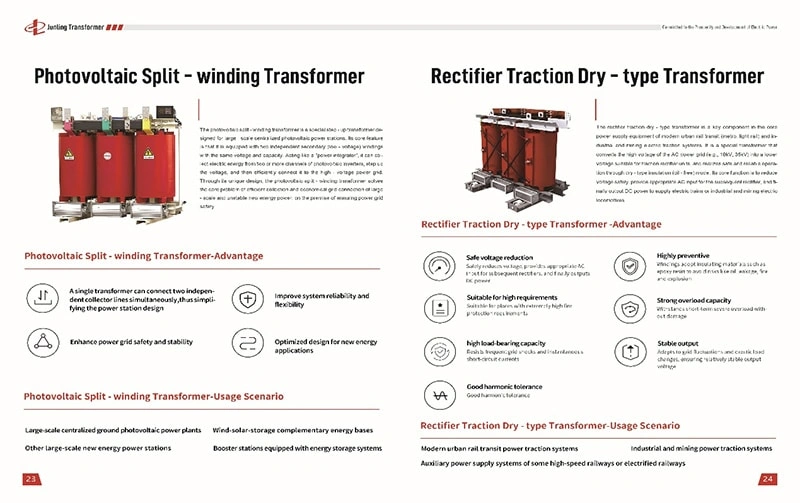
In the process of equipment selection and system integration, the oil immersed transformer is widely used in the step-up stages of large-scale ground-mounted photovoltaic power stations due to its excellent heat dissipation, strong overload capacity, and relatively controllable cost. In contrast, for scenarios such as urban distributed PV systems and rooftop installations on commercial buildings—where fire safety and spatial constraints are key considerations—the dry type transformer has become the preferred choice, thanks to its flame-retardant properties, low maintenance requirements, and quiet operation. Notably, the box-type substation, as an integrated power distribution solution, combines high-voltage switchgear, transformers, and low-voltage distribution equipment into a single unit, significantly shortening construction timelines and proving especially suitable for the rapid deployment of modular photovoltaic power stations. Currently, the combination of box-type substations with dry type transformers or oil immersed transformers has formed a mature technical approach in mainstream photovoltaic step-up systems.
From the perspective of technological evolution, renewable energy power plants are imposing higher requirements on transformer equipment in terms of intelligence and energy efficiency. On one hand, the introduction of digital monitoring technologies enables high voltage transformers and photovoltaic step-up systems to achieve remote operation and predictive fault diagnosis, substantially improving plant availability. On the other hand, innovations in energy-saving design and materials for photovoltaic transformers—such as the application of amorphous alloy cores and environmentally friendly insulation media—are driving equipment toward higher efficiency ratings and lower lifecycle costs. Looking ahead, as global installed capacity for renewable energy continues to expand, transformer products characterized by high reliability, high integration, and environmental sustainability will remain a key focus for project investors and engineering, procurement, and construction (EPC) contractors. For suppliers, manufacturers, and factories with large-scale delivery capabilities, advancing product development in alignment with these technological directions will provide a competitive edge in the international market.
Copyright © 2026 by Qingdao Junling Transformer Co., Ltd. All Rights Reserved
Privacy Policy